TL;DR - Key Takeaways
- U.S. adults spend over 7 hours per day on screens, linked to increased anxiety and depression
- The audio-first approach allows you to stay informed while reducing harmful screen time
- Audio news consumption is equally effective for retention as reading, without the compulsive scroll behavior
- Optimal times for audio consumption include commutes, exercise, cooking, and background work activities
- Multiple tools exist for audio-first consumption: podcasts, audiobooks, text-to-speech apps, and real-time social media readers
You want to stay informed. You care about what's happening in the world, in your industry, in your community. But checking the news has become a source of anxiety. Your screen time is out of control. You feel trapped between two impossible choices: stay ignorant or stay glued to your phone.
There's a third option. This is the story of how to break that false choice.
The Screen Time Crisis
The numbers are stark. According to recent studies, the average U.S. adult spends more than 7 hours per day on screens. That's nearly a third of your waking hours. The figure has grown steadily, and it shows no signs of slowing down.
But here's what matters more than the raw number: what that screen time is doing to you. Research from institutions like MIT and UCLA shows that heavy screen time correlates with increased anxiety, depression, and sleep disruption. The effect is particularly pronounced with social media apps and news feeds.
The problem isn't that you're lazy or undisciplined. It's that the apps are engineered to maximize your time on them. Infinite scroll, push notifications, algorithmic feeds that learn exactly what triggers you - these are design features, not accidents. The system works.
The Problem With Digital News Consumption
Reading news digitally comes with specific psychological costs. Scrolling is a dopamine loop. Each new story might be important, might be interesting, might be outrageous. The unpredictability keeps you engaged. Your brain is flooded with stress hormones as you read about crises, conflicts, and catastrophes.
Media organizations know this. Negative stories drive engagement. The algorithm amplifies outrage. Your feed becomes increasingly catastrophic, increasingly demanding of your attention, increasingly difficult to look away from.
And then there's the posture, the eye strain, the blue light suppressing melatonin, the constant context-switching breaking your ability to focus on deep work. Screen-based news consumption has metabolic costs.
Why "Just Stop Reading News" Doesn't Work
The obvious answer is to cut yourself off from news entirely. Become deliberately ignorant. But that comes with its own costs. You miss important information. You feel disconnected from your community and the wider world. Professional knowledge gaps can impact your career. And honestly, most people care about being informed. It's a legitimate value.
So the real question isn't: should I consume news? It's: how can I consume it in a way that keeps me informed without harming my mental health and eating my entire day?
Introducing the Audio-First Approach
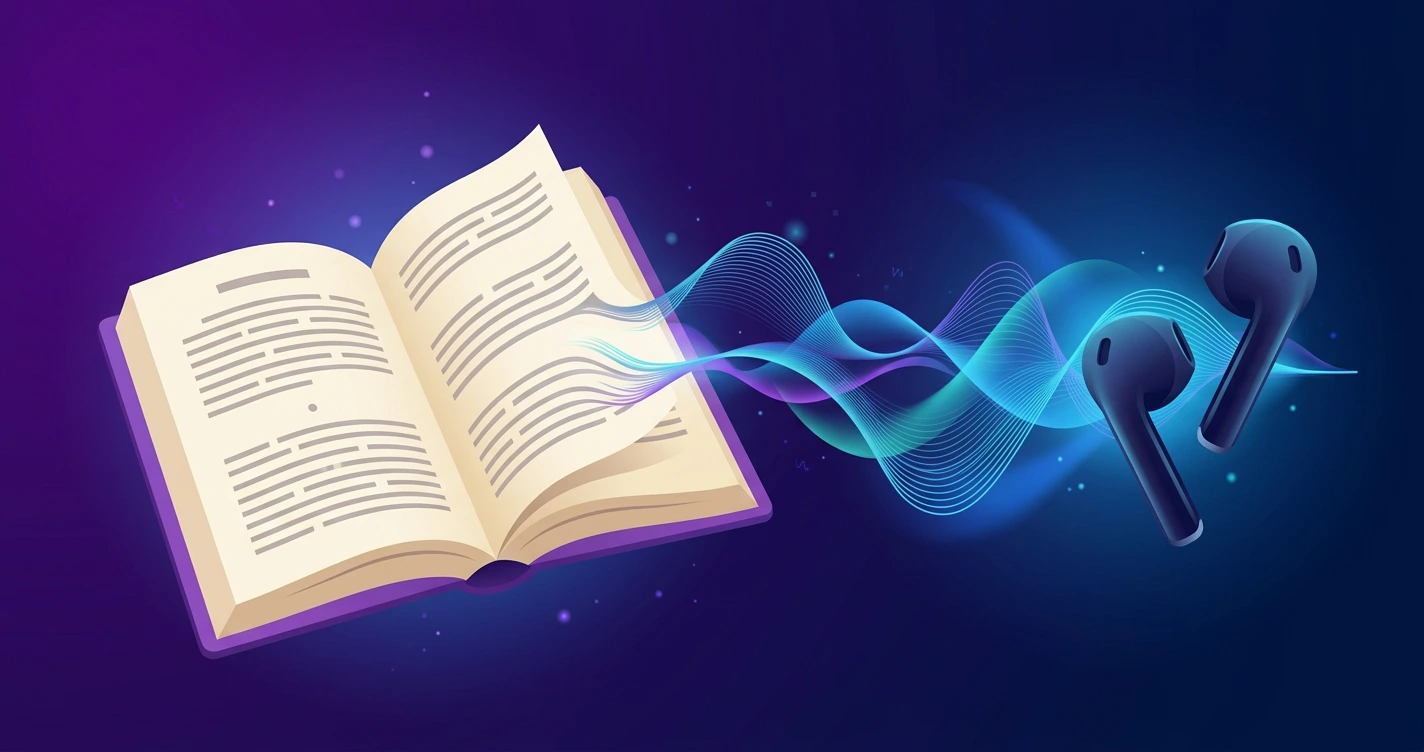
The audio-first approach inverts the problem. Instead of sitting at a screen to consume information, you listen to information while you're doing something else. Your eyes are free. Your hands are free. Your posture is natural. You're not scrolling.
This is not a new idea. Radio news has existed for decades. Audiobooks are booming. Podcasts are now the third-most-consumed media format. But audio-first news consumption is different from passive listening to a 45-minute podcast. It's about actively choosing audio as your primary interface for information.
The advantages are immediately obvious once you start: you can stay informed during dead time. The commute, the gym, cooking dinner, showering, doing laundry - these become learning opportunities instead of mindless scrolling. Your information consumption happens in parallel with your other activities, not instead of them.
Why Audio Works Better Than You'd Think
There's a common assumption that reading is superior to listening for comprehension. The research doesn't support this. Studies from the University of Florida and elsewhere show that information retention is comparable between reading and listening. In some contexts, listening leads to better retention because you can't multitask as effectively with audio, forcing greater focus.
Audio also removes the compulsive behavior associated with scrolling. You can't endlessly tap next without consequences. An audio piece has a natural end point. You can queue up your daily briefing, listen to it during your commute, and then be done. The psychological loop breaks.
Practical Strategies for Audio-First News Consumption
The Morning Briefing
Start your day with a curated news briefing. Apps like Axios, The New York Times' audio briefing, and NPR offer 5 to 10-minute summaries read aloud. Listen during breakfast or your morning commute. You're informed and you haven't opened a scrollable feed.
The Commute Window
Your commute is the easiest win. Whether you're driving, taking transit, or walking, use this time for podcasts or audio news. This is 30 to 60 minutes daily that you're currently not using for deep work anyway. Use it to stay informed.
The Background Audio Layer
Find activities where your attention is already elsewhere: exercise, cooking, household chores. Pile audio on top of them. You're not sacrificing focus time, you're repurposing dead time.
Real-Time Social Media as Audio
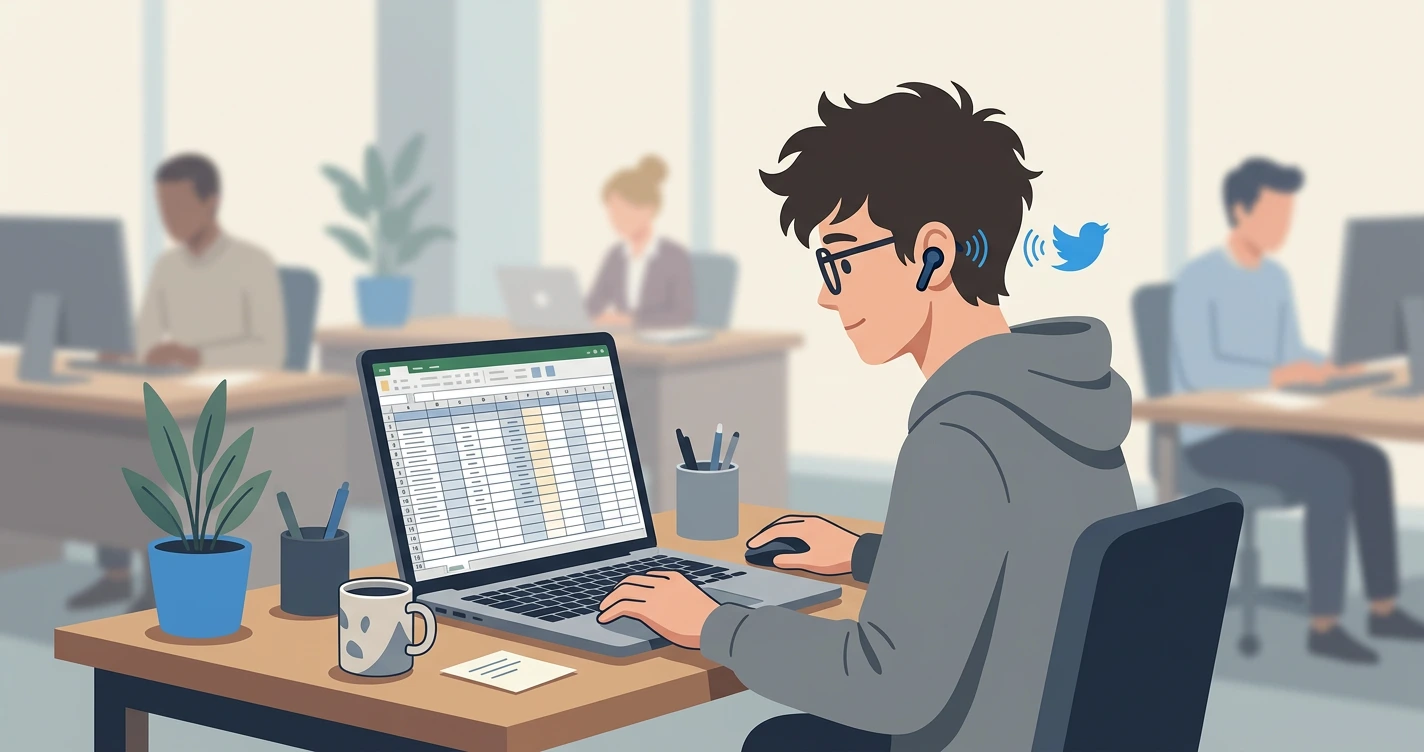
If you need to monitor social media for work or interest, convert it to audio. Use text-to-speech tools that read your feed aloud, eliminating the scroll behavior while keeping you connected to real-time updates from the accounts you follow.
Tools for Audio-First News Consumption
| Tool | Type | Best For | Cost |
|---|---|---|---|
| NPR Audio App | Podcast Network | Daily news briefings | Free |
| Axios Today | Audio Briefing | Quick, curated 10-min briefings | Free |
| The New York Times Audio | Audio Briefing | In-depth daily news with analysis | Subscription (included with Times subscription) |
| Apple Podcasts | Podcast Aggregator | Finding and organizing news podcasts | Free |
| Audible | Audiobook Platform | Long-form journalism and books | Subscription ($14.95/month) |
| Speechify | Text-to-Speech | Articles and web content | Free (basic) or Subscription |
| Xeder | Chrome Extension | Real-time social media feeds as audio | $4.99 one-time |
Building Your Audio-First Routine
Start small. Pick one window: either your morning commute or an exercise routine. Find one audio source that fits. Maybe it's a 10-minute briefing. Maybe it's a weekly podcast you're genuinely interested in. Use this for two weeks until it becomes habitual.
Then add another window. The goal isn't to consume every available news outlet. It's to replace screen-based consumption with audio-based consumption. Quality over quantity.
Track the difference. Notice your screen time decrease. Notice your anxiety shift. Notice that you're actually more aware of what's happening, not less.
What About Real-Time Updates?
One legitimate concern: podcasts and audio briefings are scheduled content. They don't give you real-time updates for breaking news. If something major happens, you won't know for hours.
There are two answers. First: do you actually need real-time updates for everything? Most news isn't actionable. It won't change your decisions. The delay between a podcast briefing and when a story breaks matters less than you think.
Second: if you do need real-time awareness, modern text-to-speech tools let you monitor social media feeds as audio. You get the real-time information without the compulsive scrolling behavior. Tools like Xeder specifically address this by converting your Twitter feed to audio.
The audio-first approach isn't about ignoring the world. It's about consuming information in a way that respects your attention and your mental health.
The Hidden Benefit: Depth Returns
Here's something unexpected that happens when you reduce your screen-based news consumption: you become capable of focusing on deep work again. Without the constant pull of your phone, without the algorithmic feed demanding your attention, your working memory settles. Concentration becomes possible.
You'll find yourself reading longer articles, books, research papers. You'll engage with complex ideas. This is the opposite of the fragmented attention that comes from scrolling.
Audio consumption of news, paradoxically, makes you better equipped for deep reading.
FAQ: Your Questions Answered
What if I miss important breaking news?
Important news rarely demands immediate action. Most breaking news becomes clear in your daily briefing. If you need real-time awareness for your job, use push notifications from curated sources rather than scrollable feeds.
Can I really stay as informed with audio?
Research says yes. Information retention from listening is comparable to reading. You may actually retain more because audio forces focus without distractions.
Won't audio get boring?
It depends on your sources. Podcasts with engaging hosts are genuinely enjoyable. Algorithmic text-to-speech can be monotonous, but advances in neural voices have improved dramatically. The key is finding sources you actually want to listen to.
How much time does this actually save?
Massive amounts. If you're currently spending 1 to 2 hours per day on news apps, moving to audio-first saves that time entirely because you're doing audio during dead time. That's 5 to 10 hours per week.
What if I want to share news with others?
You still can. If you read something interesting on a podcast and want to share it, just verify with a quick search. Audio doesn't prevent sharing, it just prevents the compulsive endless consumption.
Is this only for busy professionals?
No. This approach works for anyone trying to stay informed while protecting their mental health and attention span. Students, retirees, parents - everyone benefits from reducing screen-based news consumption.