TL;DR - Key Takeaways
- Podcast listening has grown 10%+ annually, with 50%+ of the U.S. having tried podcasts
- Audiobook sales surpassed e-book sales for the first time in 2024, continuing to grow in 2026
- The "eyes-busy economy" means 70% of podcast listening happens during commutes, exercise, and chores
- Neural voice technology has improved dramatically, making text-to-speech genuinely usable and pleasant
- Audio-first workflows are becoming standard for professionals: morning briefings, commute learning, background listening
A fundamental shift is happening in how we consume information. Audio is replacing reading not because audio is better, but because our lives are structured differently than they were a decade ago. Our eyes and hands are busy, but our ears have empty time.
This isn't a niche phenomenon. This is reshaping how content is created, distributed, and consumed.
The Audio Consumption Explosion
Podcast Growth: From Niche to Mainstream
Podcast adoption has been remarkable. In 2016, about 40 million Americans had ever listened to a podcast. In 2026, that number is over 150 million. More than half of the U.S. population has tried podcasts at least once.
But the growth rate matters more than the absolute number. Podcast listening has grown at 10%+ annually for five consecutive years. This is consistent, sustained growth in what was supposed to be a dying format five years ago.
The momentum comes from professional adoption. Content creators realized podcasts are an efficient way to scale expertise. Software engineers, marketers, investors - they're all starting podcasts. The supply of high-quality content has exploded, pulling more listeners in.
Audiobooks: The Surprise Growth Story
Audiobooks have become a legitimate publishing category. In 2024, audiobook sales surpassed e-book sales for the first time. In 2026, audiobooks represent one of the fastest-growing segments in publishing.
This is surprising because it suggests that audio isn't supplementing reading - it's replacing it for significant portions of the population. Commuters used to read books. Now they listen to them.
The "Eyes-Busy Economy"
The core insight is simple: our eyes are occupied, but our attention is available. This creates a gap that audio fills.
A 2025 study found that 70% of podcast consumption happens during activities where eyes and hands are engaged elsewhere: driving, exercising, doing household chores, working on non-cognitive tasks. Another 15% happens in what we might call "focus killing" contexts: lunch breaks, waiting rooms, airports.
This is the fundamental advantage audio has over reading. Reading requires eyes and concentration. Audio requires only ears and ambient attention. In a world where eyes are constantly occupied with screens, audio is efficient.
The Technology Enabling the Shift
Neural Voices Changed Everything
For years, text-to-speech sounded robotic and unpleasant. This limited audio consumption to human-narrated podcasts and audiobooks. But neural voice technology, particularly Google's WaveNet and competitors, has changed this dramatically.
Modern synthetic voices are genuinely pleasant to listen to. They capture emphasis, timing, inflection. You can listen for hours without fatigue. This opened the door to converting any text to high-quality audio: articles, newsletters, social media feeds, documentation.
Wireless Technology Maturation
Audio consumption exploded once wireless earbuds became reliable and affordable. AirPods, Galaxy Buds, and dozens of competitors made it trivial to listen anywhere. No cables, no fiddling, just earpods and your phone.
The combination of neural voices and wireless earbuds created a product that simply didn't exist in 2015: effortless, high-quality, ubiquitous audio consumption.
AI Narration: The Next Wave
AI-narrated content is becoming mainstream. News organizations are using AI to narrate breaking news. Newsletter platforms offer AI-narration as a feature. Publishers are offering AI versions alongside human narrations.
The quality gap between AI and professional narrators has shrunk. For many content types (news, updates, social media), the AI version is good enough. This opens the door to instant narration at scale.
Why People Actually Prefer Audio Now
It Leverages Dead Time
The most valuable thing about audio consumption is that it doesn't require dedicated time. You don't sit down to listen. You listen while doing something else. This lets you reclaim 5 to 10 hours per week from activities you're already doing.
A professional who commutes 1 hour daily gains 5 hours weekly for learning, staying informed, or entertainment. That's 240 hours per year. Imagine the compounding effect of those hours.
It Reduces Information Anxiety
Information overload is real. We're supposed to stay informed about work, industry trends, news, social networks. But reading is slow and demanding. Audio lets you stay informed without the cognitive load.
A morning 10-minute audio briefing from Axios or NPR gives you what you'd otherwise spend 45 minutes reading about. Same information, fraction of the time.
It Breaks Compulsive Behaviors
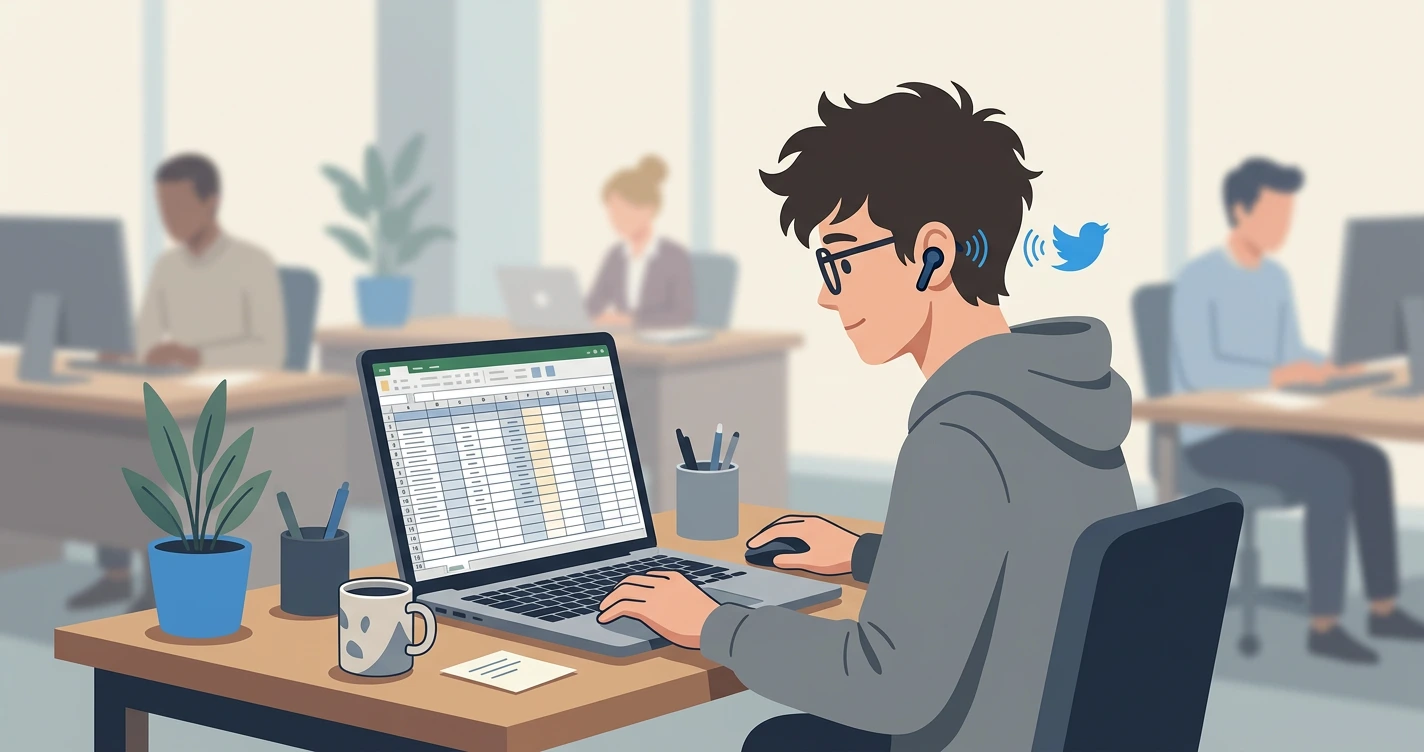
Reading news on social media is compulsive. Infinite scroll, algorithmic feeds, constant novelty - the medium pushes you toward unhealthy consumption patterns. Audio removes the compulsion. A tweet you listen to has an end point. You can't endlessly tap next.
For people struggling with screen time addiction, switching to audio consumption is therapeutic.
It Serves Actual Accessibility Needs
For people with dyslexia, visual impairment, or ADHD, audio is transformative. It's not supplementary. It's essential. As audio has become mainstream, accessibility has become less stigmatized.
This matters because it means the infrastructure being built serves real human needs, not just convenience.
Audio in the Professional Workflow
The Morning Audio Briefing
High-performing professionals now have a consistent ritual: morning audio briefing. While showering, exercising, or commuting, they listen to a curated briefing covering industry news, market updates, or research summaries. It takes 10-15 minutes and covers what would take 45 minutes to read.
This is becoming expected in knowledge work. You're behind if you don't have a consistent information intake routine.
The Commute Window
Commute time used to be wasted time or distracted time (scrolling Twitter). Now it's learning time. Podcasts, audiobooks, audio courses - professionals use this window intentionally.
The shift has been so dramatic that traffic, commute length, and professional development are now linked. People in long commutes often learn more than people with short commutes.
The Background Audio Layer
Deep work doesn't require audio - it requires focus. But many activities do allow background audio: exercise, household chores, walking, low-cognitive-load work. Smart professionals pile audio on top of these.
This is the multiplier effect. By stacking audio on top of existing activities, you double or triple your information consumption without sacrificing anything.
Market Data: Audio as a Category
| Format | 2020 Market Size | 2026 Market Size (est.) | CAGR |
|---|---|---|---|
| Podcasting (ad revenue) | $1.0B | $2.5B+ | 16%+ |
| Audiobooks (sales) | $1.2B | $1.8B+ | 8%+ |
| Audiobook subscriptions | $400M | $800M+ | 15%+ |
| Text-to-speech tools | $100M | $250M+ | 20%+ |
The market is growing. More important: each segment is growing at different rates, with newer segments (TTS tools) growing fastest. This suggests audio consumption is expanding into new use cases, not just consolidating existing ones.
The Gap in Social Media Audio
Twitter Spaces Came and Went
Twitter attempted to build audio into its platform with Spaces. It was interesting but never caught on. Why? Because audio should be consumed asynchronously, not live. No one wants to schedule their day around listening to a live Twitter Space.
This revealed a gap: social media feeds contain valuable information, but you can't listen to them in real-time. They're too asynchronous, too fragmented.
Text-to-Speech as the Solution
Tools like Xeder solve this by converting social media feeds to audio after you've scrolled them. Or better: before you scroll them. You queue up your feed, listen to it, and you're informed without the scroll behavior. The best of both worlds.
This is a category of product that didn't make sense before neural voices improved. Now it's obvious.
The Neuroscience: Why Audio Works
Different Processing Pathways
Reading and listening engage different neural systems. Visual text processing uses different brain areas than auditory processing. For some people (particularly those with dyslexia or ADHD), auditory processing is significantly more effective.
Even for typical readers, audio activates emotional and narrative processing differently. You're more likely to remember a story you heard than one you skimmed.
Focus Without Distraction
Audio naturally prevents the multi-tasking that damages reading comprehension. You can't simultaneously listen to a podcast and scroll Twitter. The medium enforces focus.
This is why audio often produces better retention than reading the same content - it prevents the distraction behaviors that reading enables.
Emotional Engagement
Human voices carry emotional information that text doesn't. A skilled podcaster or audiobook narrator can convey nuance, emphasis, and emotion that enhances understanding and retention. This is why podcast conversations are so compelling.
What's Next: The Future of Audio
AI-Narrated Everything
By 2028, most text content will have an audio equivalent available instantly. Publishers will auto-generate audio from articles, newsletters, and documentation. Readers will have choice between reading and listening at the point of consumption.
Personalized Audio Briefings
Audio consumption will become hyper-personalized. Instead of a one-size-fits-all podcast, you'll get an audio briefing tailored to your interests, knowledge level, and time availability. Generated instantly with an AI voice that matches your preferences.
Real-Time Social Media as Audio
The gap that Xeder addresses will explode as a category. More tools will emerge to convert real-time feeds (Twitter, Reddit, news) into audio. This will replace scrolling as the primary way people monitor social media.
The Audio Internet
Long term, we'll see a shift toward audio-first interfaces in some contexts. Smart speakers, cars, and ambient computing devices are naturally audio-first. The web will develop audio layers alongside visual layers.
FAQ: Audio Content Trends
Is audio content here to stay?
Yes. The trends are consistent, the market is growing, and the technology is improving. Temporary fads don't sustain 10%+ growth for a decade. This is structural, not cyclical.
Will audiobooks replace printed books?
No. Different formats serve different needs. Reading allows you to set pace and take breaks. Audio requires sequential playback. Both will coexist. What will change is which people use for which content - some content will become audio-preferred.
Is listening less good than reading?
It depends on your learning style and the content type. Research shows comparable retention. Audio has advantages for narrative and engagement. Reading has advantages for reference and depth. Neither is universally superior.
How do I start an audio-first workflow?
Start with one window (morning briefing or commute) and one tool (podcast app, audiobook service, or TTS tool). Use it consistently for two weeks. Then add another window. Build gradually.
What content is best for audio?
News, interviews, narratives, personal essays, social media updates, market briefings. Less suited: technical documentation, data-heavy reports, visually-complex content, anything requiring reference-style skimming.
Won't I get distracted listening?
Initial distraction is normal. Audio requires a different attention style than reading. After a few hours of listening, your brain adapts and focus improves. Many people find they focus better on audio than reading because the medium prevents tab-switching.