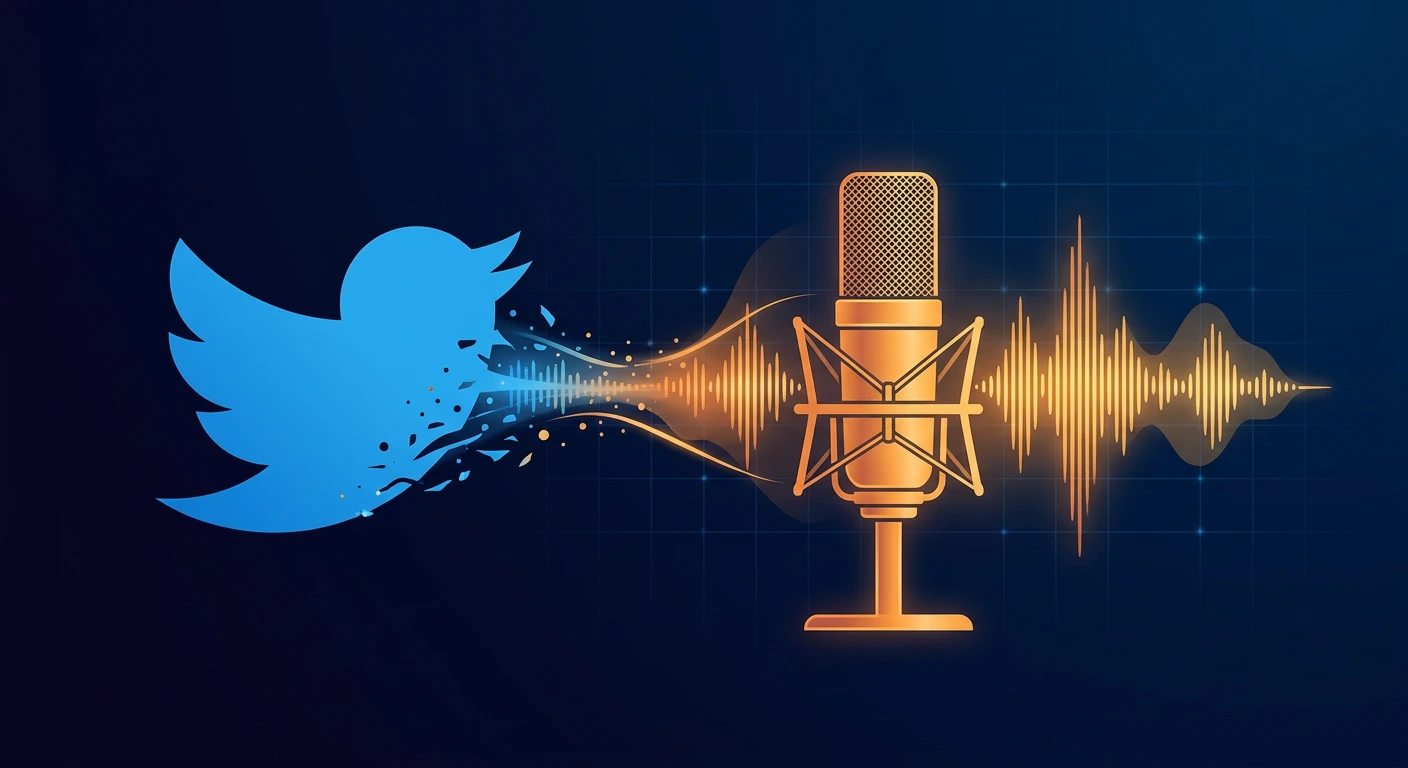
The concept seems weird at first. Twitter is a visual medium - endless scrolling, images, replies, retweets, media. How does that become audio? The answer is simpler than you'd think: tweets are fundamentally text-based, and text reads beautifully out loud. Your Twitter feed isn't just compatible with audio - it might actually be the perfect format for it.
The Problem With Traditional Podcasts
Most audio content assumes commitment. A podcast episode expects 45 minutes to an hour of your attention. A YouTube video expects you to watch it in full. These formats are long-form. They're designed to engage you deeply, to tell a complete story arc.
That's great if you're driving on a long road trip or have a dedicated commute time. But most of us have fragmented schedules. You have 10 minutes while cooking. 5 minutes between meetings. 15 minutes at the gym. Long-form audio doesn't fit naturally into these moments - you'd have to constantly pause and resume, breaking your concentration.
This is why so many audio formats fail to gain traction. They demand a type of attention that's increasingly rare.
The Tweet as Perfect Audio Unit
A tweet is typically 280 characters or less. Read aloud, that's roughly 30 seconds to 2 minutes of audio. It's self-contained. It doesn't require context from surrounding tweets. It's a complete thought.
Compare this to a YouTube video, which demands you watch from start to finish to understand it. Or a podcast episode, which unfolds over time with narrative elements. A tweet is a unit. You listen, it's done, you move to the next one.
This matters psychologically. With podcasts, you feel obligated to finish. With tweets, there's no obligation - each one is a discrete piece of content. You can listen to five tweets or fifty. You can start and stop anywhere. The format doesn't punish you for interrupting.
And here's what people miss: tweets are already optimized for this brevity. The 280-character limit wasn't a bug - it was a feature. It forced creators to be concise. That conciseness is what makes tweets work as audio.
The Power of Passive Consumption
Passive consumption is different from active consumption. When you're reading Twitter, you're actively scrolling, selecting which tweets to read, potentially clicking links. It requires constant decision-making. When you're listening to tweets, you're passive. The audio plays, you listen, you don't have to actively engage with the interface.
This shift matters more than it sounds. Passive consumption removes the gamification elements that make Twitter addictive. You can't "doom-scroll" audio. You can't compulsively tap through content. The pacing is determined by the audio, not by your anxiety or curiosity.
Passive consumption also activates different neural pathways. Listening to spoken words uses different parts of your brain than reading text. Some people find spoken information easier to absorb. Others remember it better. The format change can actually improve comprehension.
Real-World Use Cases
Once you think about it, the use cases become obvious:
- Commuting. Listen to your feed on the train, in the car, or on your bike. You're going to spend the time anyway - might as well stay informed.
- Cooking or household chores. Your hands are occupied but your ears aren't. Perfect time to catch up on what's happening in your industry or areas of interest.
- Exercise. Running, weightlifting, yoga - activities where looking at a screen is impractical or unsafe. Audio fills dead time productively.
- Breaks between focus work. You need to step away from your computer anyway. Use the time to stay connected without deep work.
- Background consumption. You're not trying to deeply analyze tweets - you just want to stay in the loop. Audio is perfect for that.
These aren't niche use cases. Most people have hours per week of dead time where audio content could fit perfectly.
Better Than It Has Any Right to Be
What's interesting is that turning Twitter into audio shouldn't work as well as it does. By every logic, a visual social network should need visuals. But the format reveals something: most of what makes Twitter valuable is information and ideas, not images. And information reads just as well out loud as it reads on a screen.
In fact, for some users, it works better. You're not distracted by visual design or profile pictures. You focus on the content. Your brain can wander without losing the thread. You consume more carefully, less compulsively.
Your Twitter feed doesn't need to be a podcast. But when you treat it like one, something shifts. The medium becomes the message. (: